

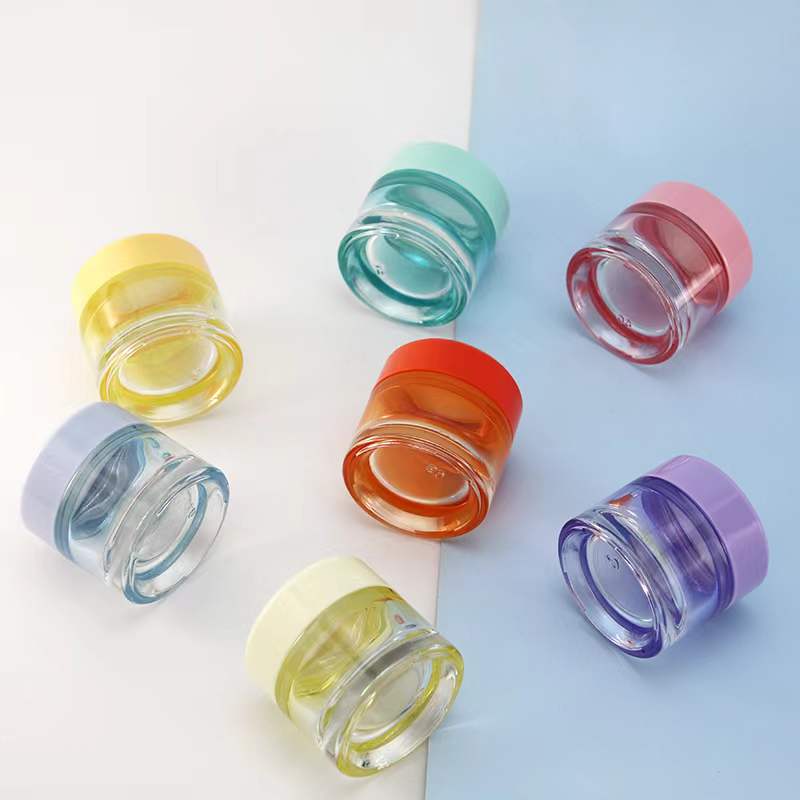
Precautions for Glassware Inspection:
-
Glassware with breakage, cracks, chipping, or sharp edges that may cut hands shall be strictly rejected.
-
Glassware must not be deformed. The rim and bottom must not be uneven, lopsided, or warped.
-
Clear (flint) glass must not contain any recycled cullet. The product must be transparent, pure white, and free of any off-color tints. For colored glass, the tone must be stable, pure, and uniformly consistent.
-
Whether produced by manual blowing or machine blowing, the glass thickness must be uniform throughout. Uneven thickness (thick on one side and thin on the other) is unacceptable.
-
The glass batch must be well melted and homogeneous. Defects such as stones (unmelted batch particles), cords (striae), and seeds (small bubbles) shall be avoided to the greatest extent possible.
-
Bubbles (seeds) larger than 1 cm above the rim are not permitted (except for bubble-effect glass). Below the rim, no more than two bubbles with a diameter greater than 2 mm shall be present, and no more than three bubbles with a diameter greater than 1 mm. Clusters or congregations of bubbles are also unacceptable.
-
After de-molding, the finished glass products must undergo annealing for approximately 8 hours (at least 6 hours minimum) to ensure stable quality and prevent spontaneous breakage over time. Glass bottles and jars shall possess adequate thermal shock resistance. When transferred from a hot water bath to a cold water bath, the temperature difference shall generally be below 39°C, and no breakage shall occur during testing.
-
Both the interior and exterior surfaces must not have prominent water marks (chilling marks). Surface defects such as visible wrinkles, scratches, abrasions, shear marks, and mold seam lines that can be felt by hand are not permitted. The surface must be free of cracks and incomplete filling defects.
-
The rim of the glassware shall be smooth and even, free of burrs, protrusions, and chipped edges.
-
Both the interior and exterior of the glassware must be clean, free of foreign matter, dust, water stains, glass debris, etc. Rust stains must not appear on the glassware, and the glass batch must not contain black specks, dust, or other impurities. Note: Rust stains on glassware are typically caused by rust from tongs used during annealing or from rusty molds, which transfers onto the glass surface and cannot be removed afterward. Therefore, it is essential to remove rust from tongs and molds before production commences. Additionally, care must be taken during melting to prevent dust and impurities from falling into the batch, which would result in inclusions within the finished product.
-
For acid-etched glass, contact with oil or grease must be strictly avoided prior to acid treatment; otherwise, uneven etching may occur, resulting in localized glossy spots. After acid treatment, residual white powder (acid residue) must be thoroughly cleaned from both the interior and exterior surfaces.
-
For decal-applied (decalcomania) products, the decals must be applied smoothly and evenly, without tilting or air bubbles. Natural air-drying for 12 hours before firing is generally required. Since residual water droplets may remain after soaking the decals, these droplets can vaporize during firing and rupture the decal film, causing pinhole defects.
-
Product dimensions must comply with specified requirements, and tolerances must not be excessive. If the product requires assembly with lids or other components, special attention must be paid to ensuring that the inner rim diameter meets assembly specifications.
-
While the appearance of the product is important, the functionality of the product shall be the foremost priority in inspection, regardless of the product type.
-
Glassware is fragile. During transportation, loading, and unloading, products must be stored and handled in an upright position. Each piece must be individually wrapped in paper and separated by partition dividers (egg-crate inserts) to prevent impact and breakage from mutual collision. Specific packaging methods shall be determined according to the product type and order requirements. However, packaging safety is paramount—the packaging must be designed to prevent breakage during export shipment and ensure safe delivery to the destination.
-
During the inspection process, carefully verify the packaging method, labels and their content, accompanying instruction manuals/leaflets, and inner/outer carton shipping marks (carton markings) for accuracy.

- go back to homepage: https://www.diviniopackaging.com/
- visit to our Instagram: https://www.instagram.com/divinio_packaging/
- Facebook:https://www.facebook.com/profile.php?id=61550621670456Linked:https://www.linkedin.com/in/guangzhou-divinio-packaging-products-co-ltd-45829a56/